
























High school students face a myriad of challenges, the most prominent being stress induced by academic pressure, athletic pressure, and social issues. A study released by the American Institute of Stress reports that in 2025, around 70% of teenagers identified anxiety or depression amongst their schoolmates and peers. As the school year progresses and academic pressure increases, the stress levels increase in parallel. Another study by the American Academy of Child and Adolescent Psychiatry states that teenagers face major levels of stress rooted mainly in school demands and frustrations. Balancing a lifestyle that includes multiple sports and extracurricular activities while still maintaining a good grade point average is extremely challenging, yet crucial for college applications. Additional mental health issues faced by teenagers are depression, anxiety, eating disorders, and even suicidal thoughts. All issues mentioned can be fatally dangerous for teenagers.
Societal Pressures and Potential Risks
Social issues stand out as the highest stress inducers. And how can a student who balances sports, high grades, and a social life have time for counseling and therapy to address these mental health issues? Having a social life has been seen as a crucial aspect to have, both to balance good mental health and also maintain strong connections that can help achieve success in the future. The expectation of maintaining a balance between a healthy social life and high academics has been a large stressor among high school students for many years. The pressure from society to have a large number of friends, while also maintaining above a 3.5 GPA, is feeling more and more like a standard for youth to achieve, but one that is seemingly unreasonable. Recent studies conducted by the National Institute of Health back this information up; although students can have both a successful social life and continue to maintain steady grades, numerous mental health issues can arise because of it. Depression, anxiety, and eating disorders are just a few concerns that health officials have when it comes to overstressed teens.
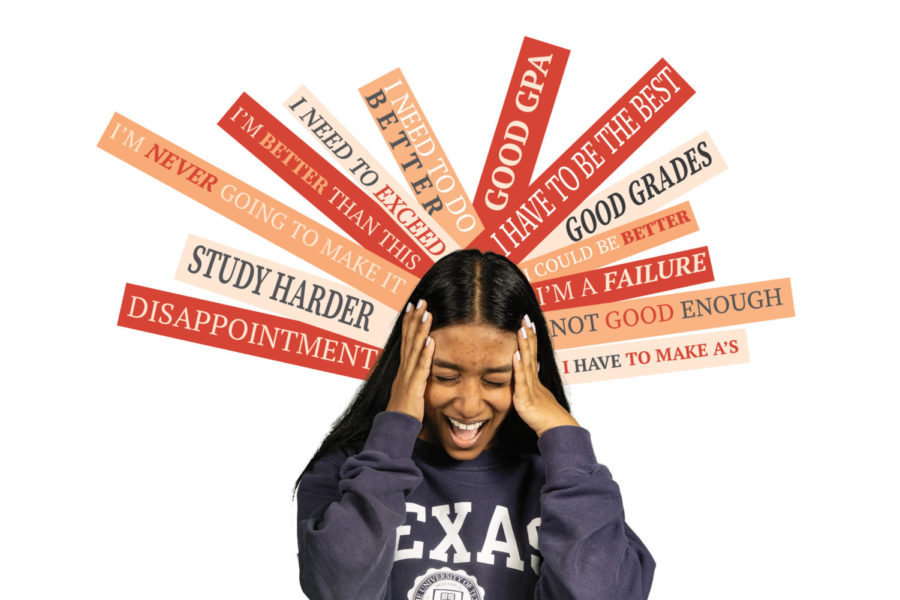
School and Extracurriculars in connection to Student Stress
So, do teachers have a role to play in their students’ abilities to manage stress and anxiety? Assigning less homework can lead to a decrease in academic rigor and material absorbed, while adding material often induces more stress. Multiple studies, including a study from the Harvard Graduate School of Education, suggest that when teachers work on treating students as individuals, their academic engagement will increase significantly, in addition to stress markers dropping as well.
When Dr. Laurie Hunter, the superintendent of Concord Public Regional Schools, was presented with data on students’ mental health, she stated that the data itself was “just so distressing on every level, because it means that there’s a really big aggregate problem.”
Various extracurricular activities unfortunately can often be overlooked in terms of how much work students are putting into them before and after school. Mr. Miller, the principal at Concord Carlisle Regional High School, states that “We’ve seen the amount of school homework go down. However, we’ve seen the amount of work that kids are doing outside of school increase. It’s an absolutely astronomical amount of work.”
Often, having someone who you can go to as a friend in academically stressful times will prove to be helpful and will eventually improve grades and academics. As stated by Alison Nowicki, the head Guidance Counselor at Concord Carlisle High School, “students are simply taking on too much.” Another aspect to note is that being comfortable with your teacher means you can approach them more easily to talk about any issues with classwork, which can thus assist students in achieving higher grades and scores.
Communicate Needs
Nowicki states that “as a teacher, you’re attempting to sort out what is going on in your own lives, and we (teachers) are unable to know everything that’s going on with students’ lives”. Her comment brings in an entirely different perspective on the issue. The teacher’s side. Although most issues may be rooted in stress caused by teachers in the classroom, the teachers themselves can experience high levels of stress, too. While teachers try to know their students and their student’s needs, it’s important to remember that even teachers can only take on so much. That said, if there is open communication from a student to a teacher or even a guidance counselor about how the student is feeling, this can create an easier path for everyone to work towards addressing how to alleviate or help manage some of those stressors in a more collaborative approach.
Sports Influencing Stress
Another area that can cause stress for students is in balancing their commitment to one or more sports. Being a highly skilled athlete requires more than just talent. It requires hours of work and dedication. As high school students continue to face the overwhelming pressure of becoming a varsity-level athlete, pressures on becoming academically “perfect” increase as well. A study from the National Library of Medicine concluded that approximately 91% of all student athletes experienced at least some level of stress due to sports. For Eva Blackburn, a ninth grader at Concord Carlisle High School, she admits that it can be easy to start to “look at those people who are on varsity, all hundreds, and you kind of think of how much better these kids are than you.” This pressure, in addition to the academic pressure stated before, can be extremely detrimental to teenagers’ mental state.

The Facts & Ways to Combat Stress
Overall, data and statistics from multiple different institutes confirm that high school students face an overwhelming burden of stress and anxiety due to the ongoing pressures for academic success, athletic achievement, and social issues. Having strengthened teacher-student relationships, modifying academic demands, and making sure access to mental health resources is available are key to helping students navigate their day to day pressures. In simple terms, as stated by Nowicki, “avoidance is not the cure for anxiety, it is the thing that perpetuates it”, meaning students and parents should work to address mental issues in teens. Knowing not just that stress commonly occurs at this age, but talking about it and ways to alleviate or at least manage it better could make all the difference for a student who feels these types of societal pressures. Almost directly restated by Dr. Hunter in a separate interview on the topic, she remarks that “Pretending you’re okay simply won’t make the issue better.”
We should all be reminded that one thing is strongly evident in this generation of teenagers. Behind every progress report, every scoreboard, and every friend list is a teenager trying to navigate numerous societal pressures. While these pressures are not uncommon, continuing to talk openly about stress, and how to manage it, can remind students that they are not alone, and that support is always within reach.