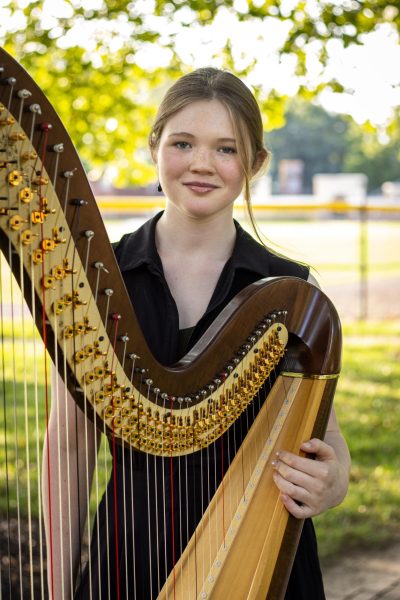
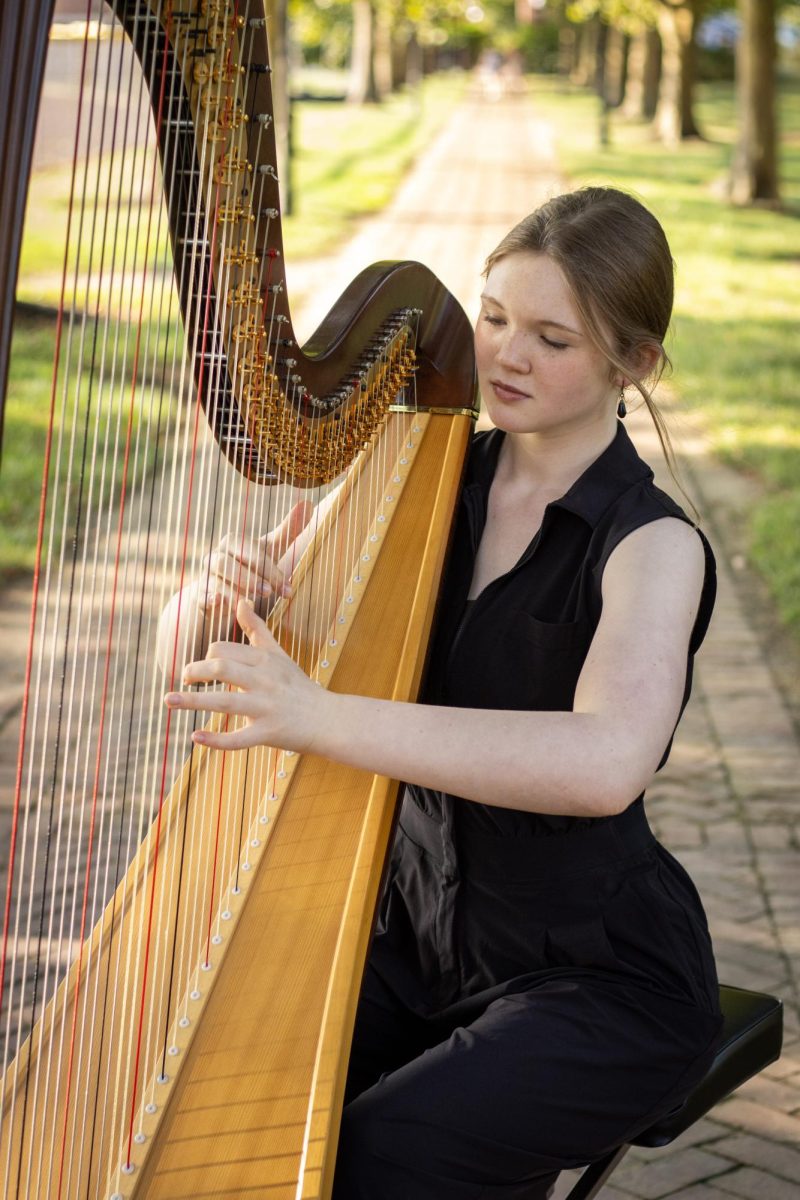












The transition to college is a milestone for any high school senior. For Concord-Carlisle High School senior Flora Lemon, though, it also means crossing an ocean to begin a new chapter in a new city and country. Next school year, she will head to Dublin, where she plans to study harp performance and composition through a joint program at Trinity College Dublin and the Royal Irish Academy of Music.
Lemon first began playing the harp at age nine. Before that, she had some experience with piano and elementary school music classes, but she was particularly drawn to the harp. “I have loved the sound of the harp since a very young age,” she recalled. While her parents were initially hesitant about such a large instrument, they agreed she could try it if they could find a teacher nearby. As it turned out, harpist and Berklee College of Music instructor, Felice Pomeranz, lived just 20 minutes away in Sudbury, Massachusetts.
For the next eight years, Lemon studied with Pomeranz, whose teaching style, adapted to Lemon’s unique way of learning, greatly influenced her musical path. “Felice is a very patient and kind person,” Lemon said. “As someone who struggles with learning disabilities which impact my ability to learn music, it was a great experience. She taught me in a way I could best understand, not how others thought teaching should look.”
Lemon notes that dyslexia, which she has struggled with her entire life, made learning from traditional sheet music an obstacle. As a result, she and Pomeranz developed a strategy based on music theory that helped her learn by understanding the music structurally rather than reading notes. “When learning a new piece, I do a harmonic analysis on the music,” Lemon explained. “This includes understanding the chordal progression, form, and key modulations in the music so one can anticipate where the music is going.”
Because dyslexia can make recognizing visual patterns on a page difficult, Lemon also emphasizes mental practice and memorization to internalize rhythms. “Reading music off the page at all times is not only a challenge, but I also never perform as well as I would if I had memorized the piece,” she continued.
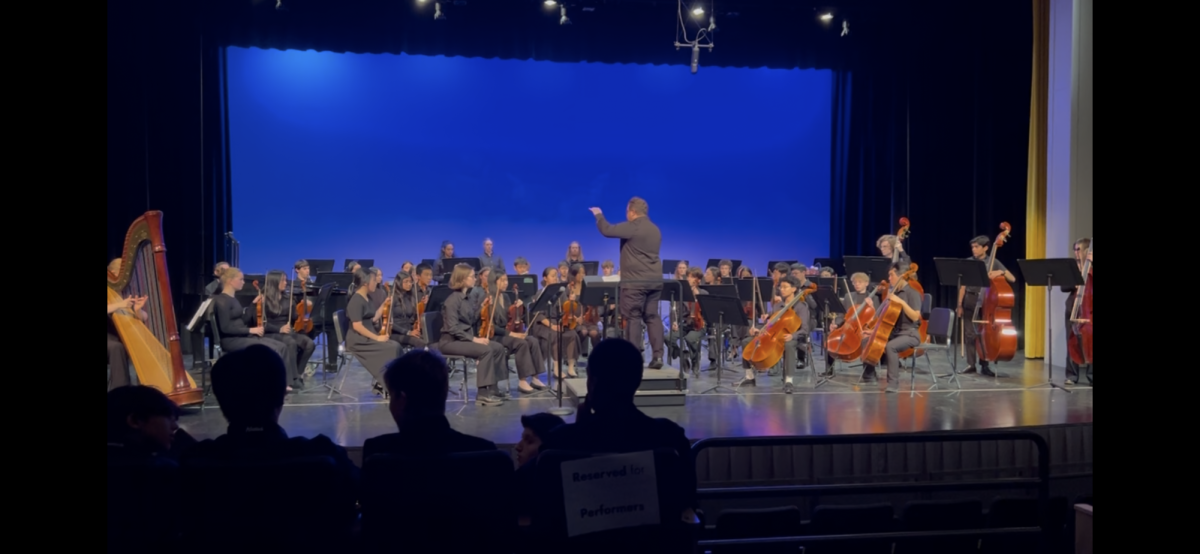
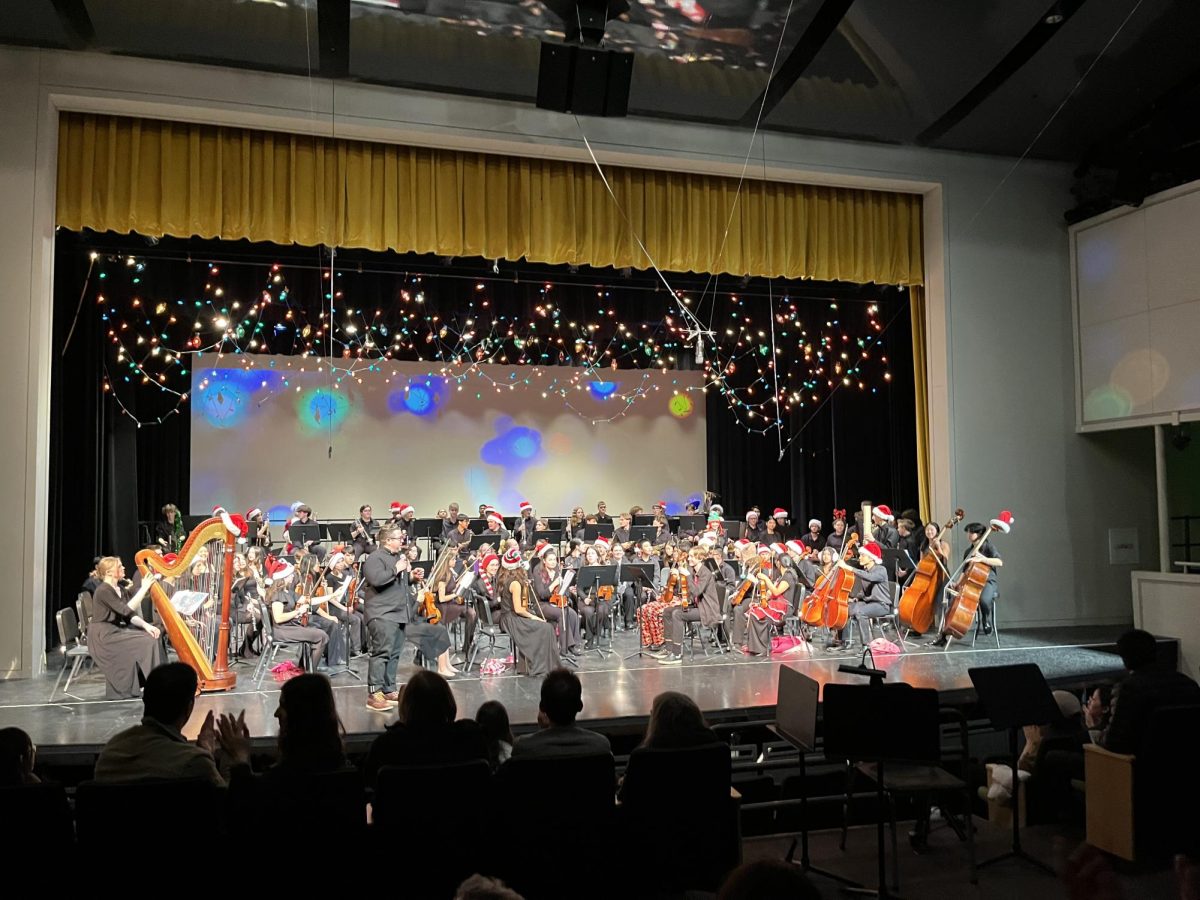
At the same time, Lemon has been involved in school music programs. She played in the Concord Orchestra from elementary through middle school and continued in the CCHS Orchestra during high school. She has also performed as a guest with the CCHS Wind Ensemble, participated in jazz ensembles, and been involved in the school’s Chamber Music Club. This past February, she performed with the CCHS Frontiers Ensemble, which premiered a new piece called “Patterns in the Ether” at Dartmouth College.
Through summer intensives, Lemon has continued to diversify her musical experiences, performing in harp ensembles, symphony orchestras, and chamber groups. In her free time, she enjoys performing in the community and playing music with friends.
Even so, the turning point that shifted the harp from a passion to a possible career path didn’t come from a performance, but from composition. After completing her first original work, Persons Tango, a three-movement suite for pedal harp and percussion, Lemon realized she wanted to study music at the university level. “Music has played a very important part of my life,” she explained. “But it wasn’t until I finished my first composition that I really felt like performance and composition was what I wanted to continue studying.”
In the fall, Lemon will take that next step abroad in Dublin. Although she knows that choosing a path at 17 comes with uncertainty, she is sure that she will carry music forward with her into the future. “Whether or not I’ll become a full-time composer or try to land a job in an orchestra is still unknown,” she admitted. “But what I do know is that music is my life.”
In addition to the education, Lemon is also excited about immersing herself in Dublin. “It’s an amazing, culturally rich city that I can’t wait to explore,” she said. Moving abroad will also be a major personal step. “It will be a big jump for me, as I will be living alone and doing a non-traditional college experience.”
Lemon is aware that many neurodivergent students are often sidelined in learning music because of rigid teaching styles. “I know there are plenty of other people just like me out there who struggle with the same thing, and are turned away from learning music at a young age because their teacher doesn’t know how to teach them, isn’t willing, or simply doesn’t have the resources to do so,” she stated. Inspired by the support she received from Pomeranz, Lemon’s goal is to dismantle those barriers and create more inclusive spaces in music education. “I believe that music is something for everyone and shouldn’t be barred from people due to how their brain works.”