






The Heritage Project
This project began as a way to increase awareness about Hispanic Heritage Month. But then, the Community History Club (CHC) started looking at how so many affinity months, days, years, all seem to overlap with each other in some way, which made the group wonder if celebrating our differences could help our community see more commonalities, and ultimately, bring the community even closer together. So, the Heritage Project was born.
Our goal with this project has been to interview a wide range of faculty and students of different heritages to celebrate, inspire, and educate one another about all forms of heritage. In the spirit of togetherness, the Community History Club partnered with The Voice to bring detailed interviews like this one to the CCHS community. By conducting and publishing interviews, CHC aims to increase school awareness of peers’ heritage and inspire others to share and be proud of their heritage, too. We have conducted many interviews and are looking to increase our repertoire even further (see the end of this article for more information on how to join)!
Heritage Spotlight: Mrs. Holt
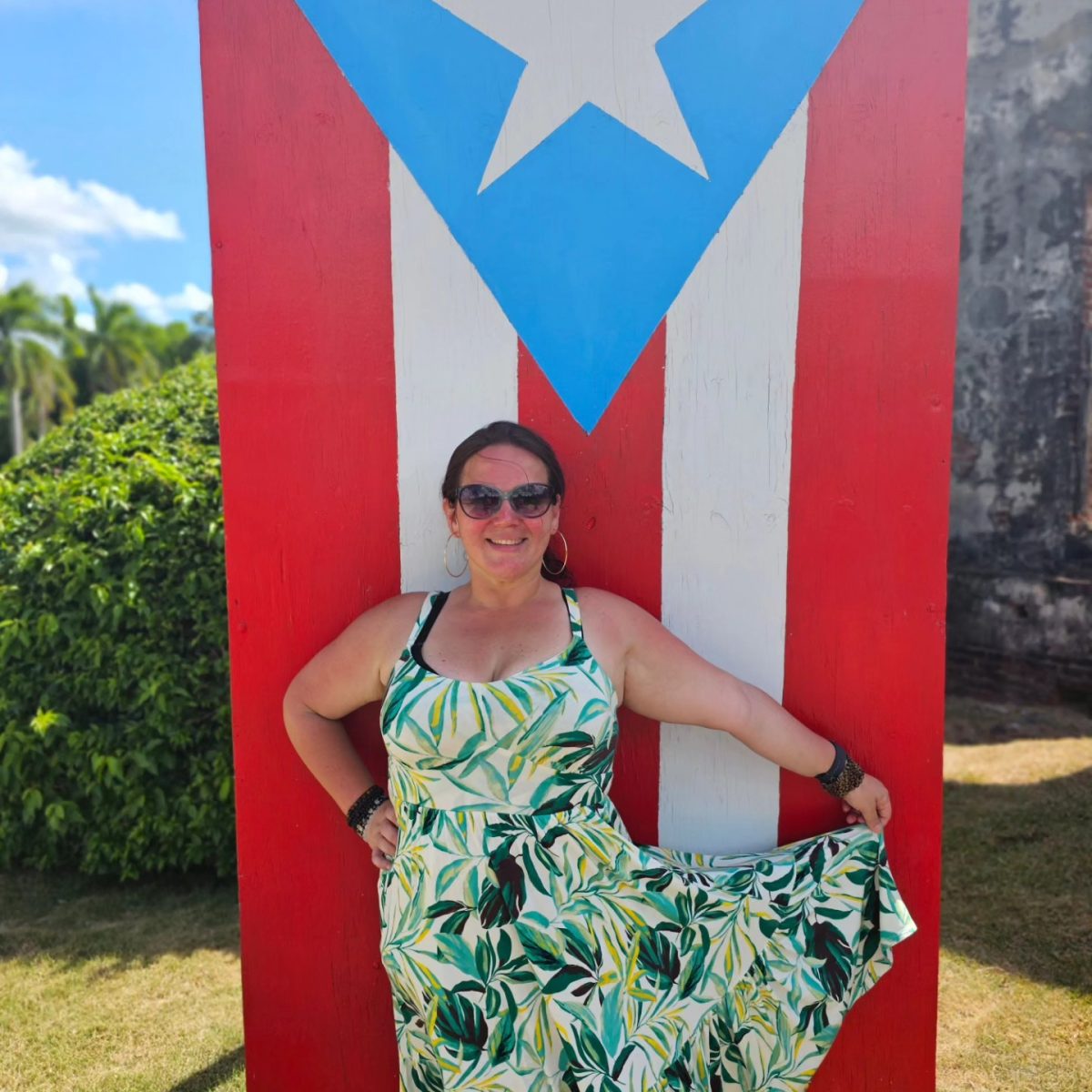
Mrs. Holt is an English teacher at CCHS. She grew up in Germany, and she moved to Puerto Rico in the Spring of 1993. In 1994, Mrs. Holt moved from PR to Georgia. She has two boys, both born in Lakeland, Florida, where she lived before moving to MA in January 2024. This interview focuses on Mrs. Holt’s Puerto Rican heritage and what it means to her.
Q: Who are you, and what does heritage mean to you?
A: Hi, I’m Mrs. Holt, and I teach English here at CCHS. I am from the island of Puerto Rico! To me, heritage means the island’s music, food, and culture. I grew up in Germany for the first ten years before moving to the United States. So, my connection to the island isn’t a matter of place, but rather of people, food, and home. You know, Puerto Rico has unique dishes, and we have our Bomba dancing, which is unique to our island. It comes from Africa to Puerto Rico, and we have a diverse cultural heritage; salsa is like the king of music (but I think everyone knows Bad Bunny is amazing). Reggaeton is definitely on top right now. But it’s about the things that bring us together, the things that remind us of home.
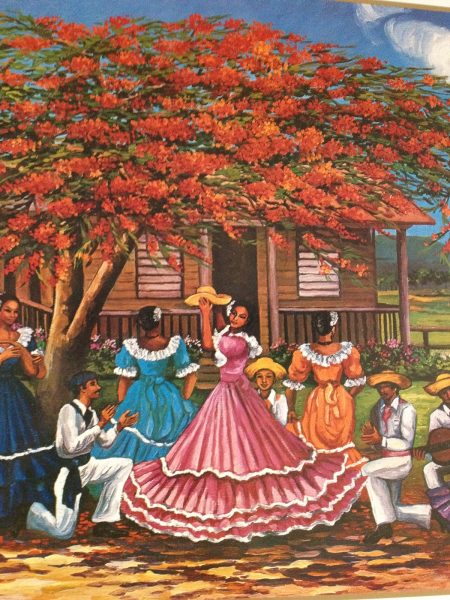
The image displays a Bomba dancer in traditional dress. The musicians are playing as she dances under the flamboyan tree (Royal Poinciana). The house behind is a country house known as a Jíbara house.
Bomba is an Afro-Puerto Rican traditional dance and musical style where the dancer leads a “dialogue” with the lead drummer. It is Puerto Rico’s oldest musical tradition and a powerful expression of its African heritage, resistance, and identity.
Q: And so, you grew up in Germany, right? Do you think that impacts your relationship with heritage?
A: When you grow up traveling and experiencing different places, it definitely becomes part of you. There is a point like, ‘I’m a citizen of the world.’ I lived in Germany for a long time and traveled all over Europe. I have been exposed to various dishes, including rice and beans, pork chops, and salsa, from my parents. Then we moved to the States in 1994, and I learned country music and English here. I collected all these pieces of my core and soul; home is always my island. Two summers ago, I took my boys (who were born in the States) to Puerto Rico so they could see the petroglyphs [carvings on a natural rock surface] left by the native Taíno people. They need to get a sense of home and culture, put their hands on the same stones their ancestors did, and see a house in the same style in which their great-grandmother, my grandmother, lived. A Jíbara house, a very country house, [with] one room and a hammock for a bed, and the kids sleeping in hammocks on the porch. And even though they know (they’ve always known) they’re Puerto Rican, not being there and seeing it, it made them feel disconnected. Since visiting the island, they’ve been embracing learning Spanish and being excited about all the different cultural things. They’re more aware that they have this other, important part of themselves, and they’ve really leaned in and connected. And so whenever I think of home, home is where my mother’s at, home is where my island is, home is where my people come from. So, even though I grew up in Germany and have been living here in the States for 20 years, Puerto Rico will always be my home.
Indigenous Taíno Contribution: The Taíno people, the island’s original inhabitants, contributed the use of native plantains and their ancestral wisdom in working with local agriculture.
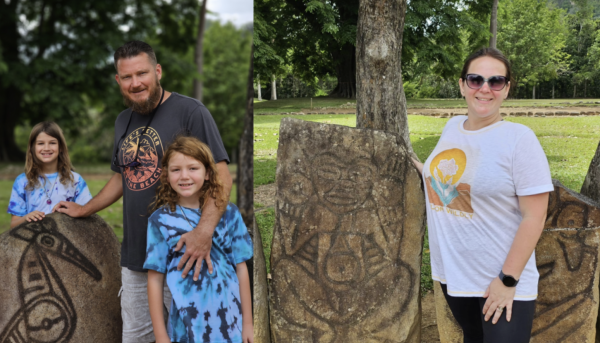
In the photos above, Mrs. Holt and her family are visiting Centro Ceremonial Indigena Caguana in Utuado, Puerto Rico. They are standing by petroglyphs carved by the indigenous Taíno people before Spanish colonization.
Q: You mentioned many specificities about your Puerto Rico culture. Do you have a favorite activity or cultural aspect that speaks to you?
A: I love that we live with a particular kind of rhythm. You know, there’s a running line, all of our hearts beat like salsa music, and it’s definitely different; there’s a vibrancy to life that is very different from being in the States. You know, music is everywhere, food brings everybody together in all cultures, and yet, in every corner, someone is frying up something. Bacalaítos-I mean, the vivid memories I have are around the food and us coming together. You would go to someone’s house, and they have a whole pig roasting on a rotisserie, because we’re gonna feed the entire neighborhood with this pig, as we’re making pernil [Slow Roasted Pork Shoulder], and it’s delicious, and brings us together. I love that because I am the person who brings Puerto Rican food to my American family. My husband’s family goes, ‘What is this?’ And then I feed them, and they go ‘Can you make it again?’ And Thanksgiving, everyone is like, ‘Are you going to make the pork?’ And now I don’t live in Florida with them, because I’m here, and they’re like ‘Oh man, we miss you at Thanksgiving’ and I know it’s not me they’re missing, [it’s] the pork, the rice. And I love the music, because music’s everywhere, it’s a big part of vibrancy. And people often say, ‘Well, all Spanish people know how to dance,’ and that’s because we live with music around us all the time! And it’s not formal ballroom dancing, that’s a whole different game, I mean, like being a social dancer, being able to hear the music, not really have to have any choreography, and just jump in and have fun. That’s my favorite.
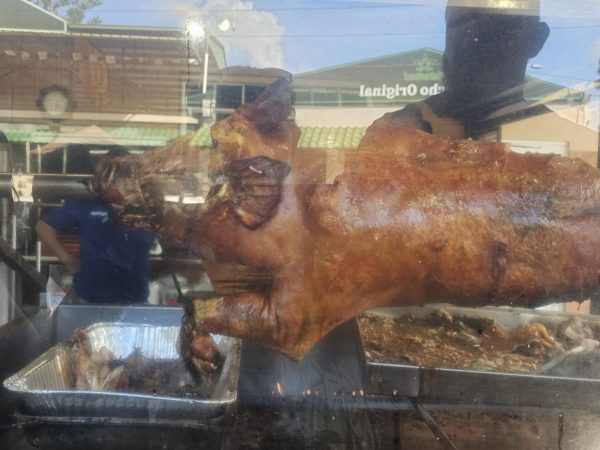
The making of Pernil, a traditional dish in which pig shoulder is slow roasted.
Q: Do you have a favorite Puerto Rican food?
A: Well, the comfort food is arroz y abichuelas (rice and beans) with pork chops and plantains; that’s my favorite, that’s my comfort food, but [you] know, I like food! Mofongo is another large side dish, consisting of mashed plantains with garlic and a small amount of olive oil. You mash it and serve it as a side with whatever meat you’re cooking. I like plantains. I used to grow them in my house in Florida; that’s how much I like them. But let me tell you, Guava pastries, yummm. So good. So, you take the baking sheets, the little filo sheets, a little piece of Guava Paste, and a little bit of cream cheese, and you put it in the oven and sprinkle with the cane sugars, the hard sugar, right, ah man, talk about delicious anytime. So good. I recently learned how to make this myself. If you can’t find the bakery, you can become the bakery.
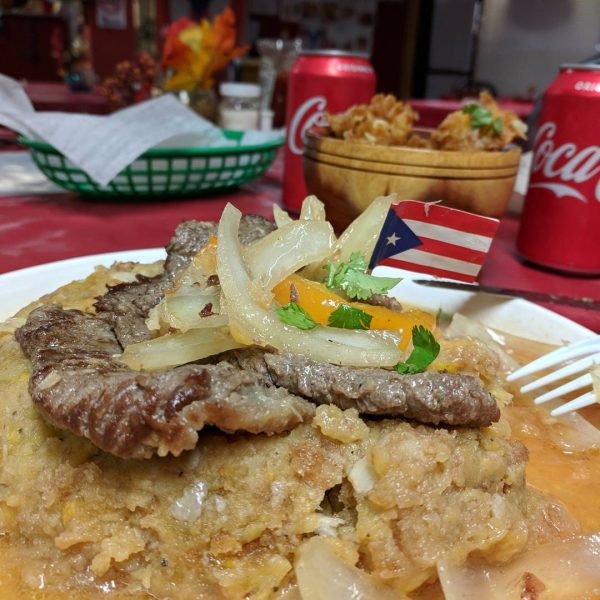
Mofongo is an iconic national dish that embodies the island’s history, a powerful fusion of its diverse African, Indigenous Taíno, and Spanish cultures. It is a symbol of the Puerto Rican people’s resilience, cultural pride, and shared heritage.
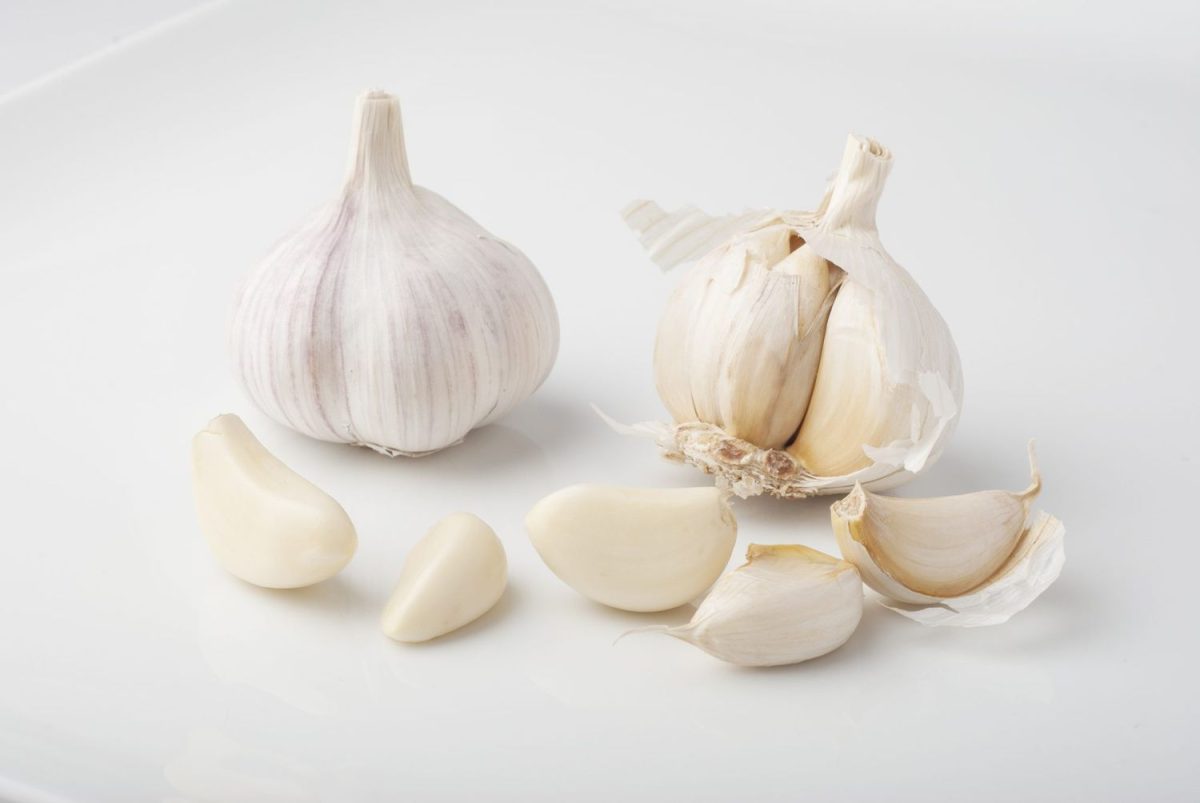
Spanish Additions: Spanish colonizers introduced ingredients such as garlic, olive oil, and pork, which were eventually incorporated into the mash to create the flavorful mofongo we know today.
A Taste of History and Identity
Q: Do you have a favorite anecdote of your heritage?
A: So, the island lost a lot because of colonization. We were taken over by Spain, then taken over by the U.S., and so our culture has been constantly clashing with this cross of people. But there are places on the island where anthropologists have found foundations of full stone buildings. Some of these places still have carvings of various entities, beings, or faiths, such as gods, goddesses, and spirits. And, there’s not a lot of those things left, but [they are] there. It’s fantastic to see something thousands of years old, before colonialism, before all of that. I visited the Botanical Garden of Puerto Rico, a beautiful botanical garden. They have a museum in the garden, and it’s not advertised nearly as much as it should be. In that museum, the story goes even deeper into the history. It talked about how the people from South America, the Indigenous peoples of South America, the Arawak people, built the canoes to come across from South America to the islands of the Caribbean, [kind of] like Moana and the wayfinding, right? Except that this also encompasses South America and the Caribbean. And that is history we don’t teach in school in the States; it’s history that I didn’t learn anywhere. Then I visited a small museum within the botanical garden, where they displayed a collection of artifacts. And it’s all in Spanish, so I’m translating for my kids, and they think I know what I’m talking about, but this is my first time learning it, too. And I think it’s great that we’re- as a people we’re trying to preserve the ancient parts of our culture as a people. Because we understand the colonization aspect and are familiar with the European part, we must preserve what we have due to these factors. So it was really cool to find this place. There’s one place called La Piedra Escrita, it’s a giant boulder, and I mean ginormous. And on it they’ve carved symbols. One symbol is the Coqui, a tiny frog native to the island that sings in the dark and makes a *co-ki* sound. They have a symbol for him, and next to it, there are other symbols. My favorite one is the swirly swirl, a symbol of the universe. And it’s in this giant stone, and you can touch it. It’s not museum quality; you can touch the stone. So you can hold something that your ancestors carved thousands of years ago. And that’s so cool.
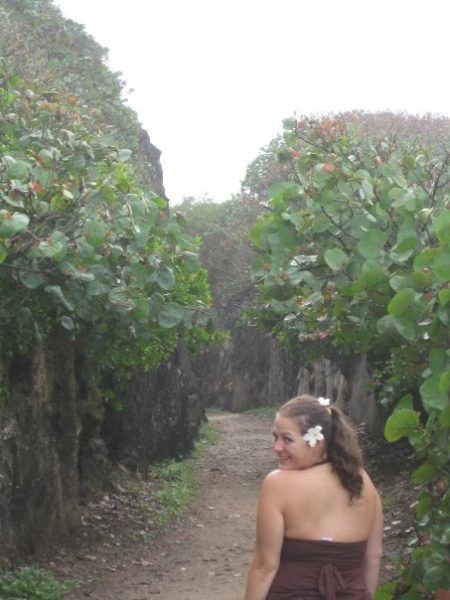
In the photo, Mrs. Holt is walking through the Guajataca tunnel at Guajataca Beach in Quebradillas, PR.
Q: Do you think your heritage or culture will change in the future, and if so, how will it change?
A: I think that as we grow older, and as we have more experiences, [you know] we as human beings will evolve and change. So, it does change, and we learn. And now, as an adult, I’m actually learning more about my culture. My grandmother was a Bomba dancer, so she was very skilled with the traditional dresses and movements. My mom learned when she was little and then stopped, and I never learned. Now that I’m a thousand years old, I [want to] learn too! And so I will start taking Bomba dance classes just because I can. So, things change, but as I’ve gotten older, I want to learn more and embrace my culture more.
Sonya Mellnick of the Community History Club conducted this interview with Linda Holt. This interview is one of many for the Community History Club’s Heritage Project, a continuous effort to interview faculty and students at CCHS about their culture and heritage. In this manner, the articles we create help students and staff learn about the different cultures that thrive in our community, and how students at CCHS can remain attached to their respective heritage in an increasingly globalized society. If you would like to be part of this project, you can contact Sonya at [email protected] or fill out this Google form below: